Our second class for Disney Heritage explored the Golden Age of Animation for the Walt Disney Company which created a base for the company to create its empire upon. As most know, Walt Disney started his career off in animation being an animator himself and after the failure of his first company in Kansas City he packed his bags and heading to California to try his hand out in the animation industry out there.
After starting out in California, and stumbling around in animation there Walt got caught up in a trademark war and lost his first character’s rights to Universal (Oswald the Lucky Rabbit) who he had a contract with at the time. After going out to New York to work out a way to maintain the rights, and failing, he sent a telegram to Roy stating “Don’t Worry Everything Ok”

It was there on a train ride from New York to California after losing Oswald, that Walt created the iconic character we know today, Mickey Mouse. Mickey was the one to kick off the Walt Disney Company into the successful business we know today.
Steamboat Willie (1928)
Walt loved experimenting with animation, and after creating Mickey Mouse he decided to push the boundaries with standard animation and created the first cartoon with sound, Steamboat Willie.
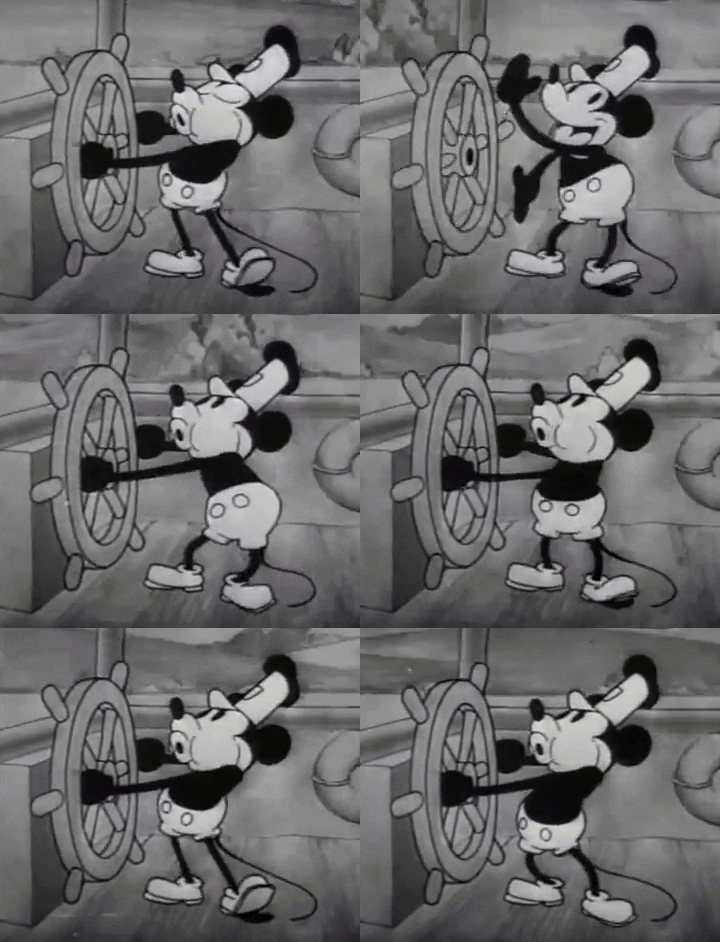
With the success of this, he moved on to the Silly Symphonies series with incorporated music along with color, which had never been done before. One short in particular captivated audiences that Walt took notice on. The 3 Little Pigs was the first short that included a song in the cartoon and audiences loved it. Walt knew in order to survive and thrive they need to do incorporate more of this type of animation but in a feature-length animated movie.
Snow White and the Seven Dwarves (1937)
After the success of the success of Silly Symphonies, Walt knew he had to do something that incorporated music, color, and sound into his animation, something no one had done before and he had an idea. So one night after work he told his animators to go out and have dinner on the studios and when they were done to come back for a table read. Once they were done Walt played out a story to his animators, acting out all the parts and playing out this fairytale and they loved it. After he was done he explained to them that this was their new project and that they were going to take on a full-length animation film, Snow White and the Seven Dwarves.

Walt had a personal connection with this story, when he was younger he won a contest to see this story as the movie as a silent film and that is why he chose it as his first animated movie. However, for this film artists now had to bring a believable human character to life and not just a silly cartoon character. This feat was taken on by Grim Nadweck who suggested that they make Snow White young to make her fit with the animation that they were making. Along with good animation, the story was the most important thing in this film. They actually took out an entire scene because it slowed down the story “The Music Soup” because Walt wanted it to be perfect. 
Walt wanted this to be treated just like any other film, so on December 21st, 1937, they had a big Hollywood premiere at the Carthay Circle Theater in Los Angles. Everyone in Hollywood thought it would be a disaster, however, they still came to the premiere to see what all the talk was about. Walt knew audiences would love it, but he had no idea what a success it would be. Praised as “Disney’s Folly”, it made $8.5 million at the box offices and people everywhere couldn’t get enough of this fairytale.
Pinocchio (1940)
After the success of Snow White, Walt wanted to expand and build a new animation studio. The next project on the table was Pinocchio. This film was also a game changer because it had better artistry because the animators were more comfortable with this new art form and had more technological advance with the creation of it.

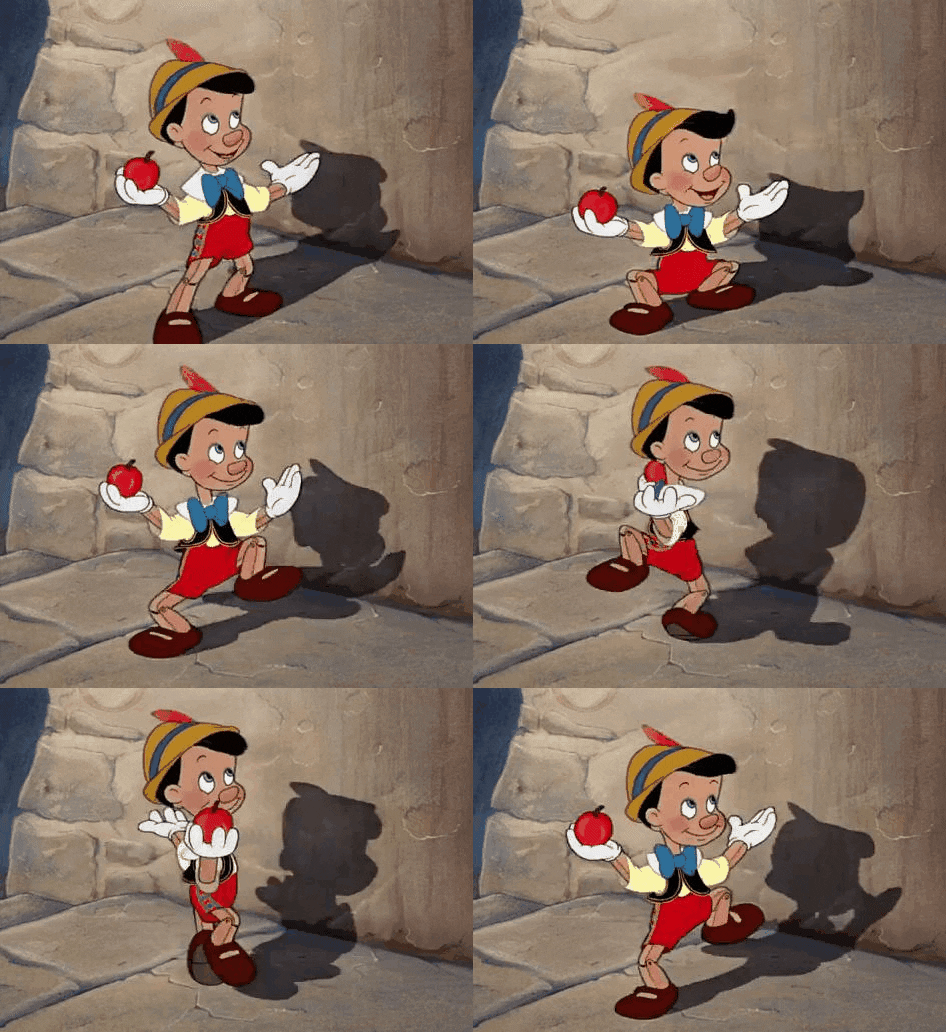
This film also introduced personality animation which makes the characters expressions more human-like with more emotion. Frank Thomas and Ollie Hoshoson helped perfect this by incorporating this into their animation by asking the questions of what the character is thinking and feeling. With this, they would then incorporate this and draw these emotions onto the character as their facial expression. These 2 ended up as best friends and would go on to animate characters that would pair off together such as Captain Hook and Mr. Smee, Baloo and Mogowli.
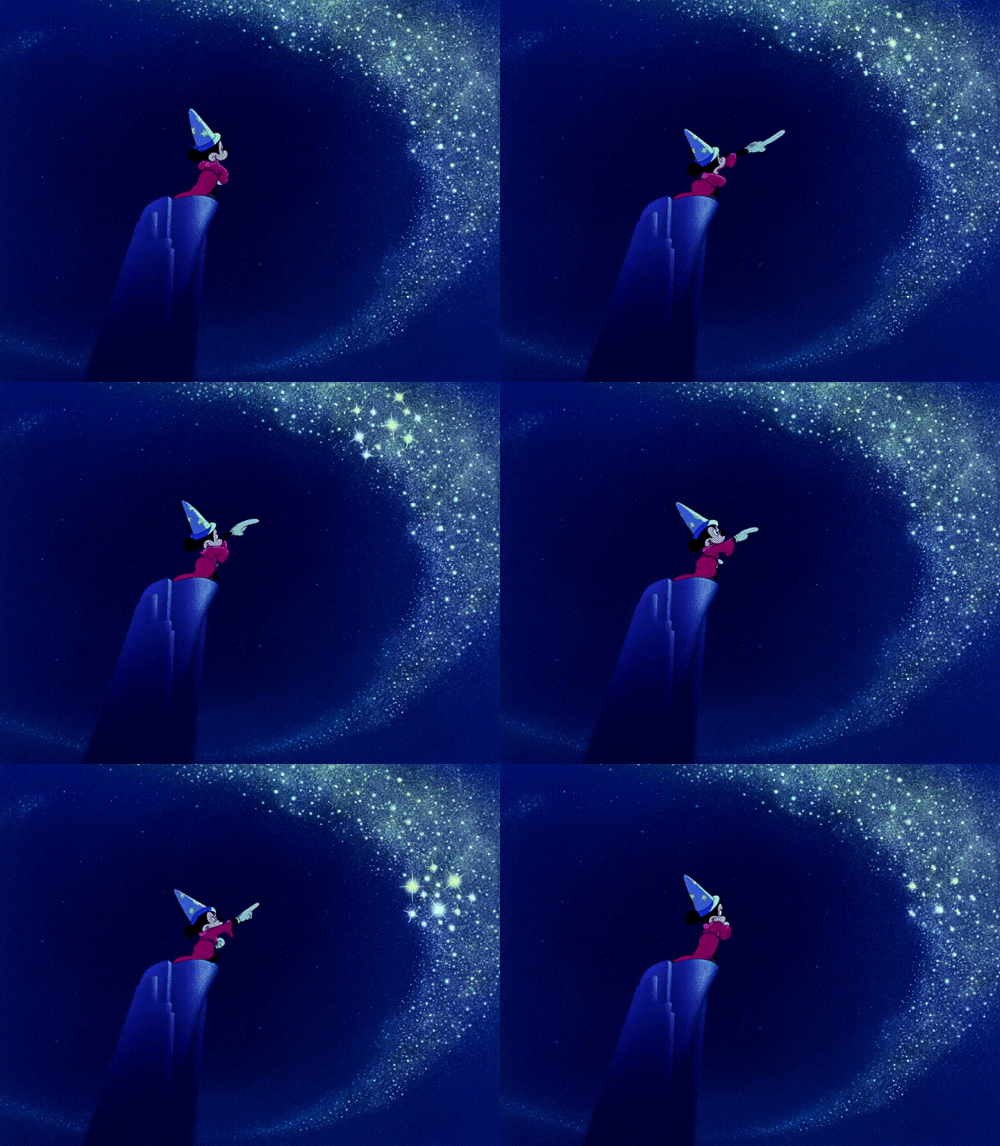
Fantasia (1940)
By 1940 Mickey’s popularity started to slip and with the introduction of Donald Duck, more people started to relate to him. Mickey Mouse was Walt’s baby so he wanted to recapture people’s interest in him. Walt was always looking to the future for new things  to make his pictures stand out. One day Disney had a chance encounter with orchestra conductor Leopold Stokowski and they came up with something that revolutionized theater music. Fantasia debuted on November 13th, 1940 and was the most original and unusual project that Walt Disney took on. It also introduced Fantasound a stereophonic sound reproduction system developed by engineers of Walt Disney Studios. This movie traveled from one town to the next like an orchestra and was conducted as such.
The Film proved to be challenging for the artists, with Walt pushing them to their limits but the outcome was incredible. It wasn’t a huge success at first because people wanted more stories like Snow White and Pinocchio, but during the 1960s it rose in popularity
Dumbo (1941)
After the losses from Fantasia, Disney needed to create something “smaller” to recover from Fantasia. The story behind Dumbo came from Joe Grant and Dick Huemer who really liked the story and presented it to Walt. At first, Walt wasn’t interested, but they kept giving him snippets of the story always ending in cliffhangers and he realized if he was wanting to know what happened next audiences would be just as invested in the story.
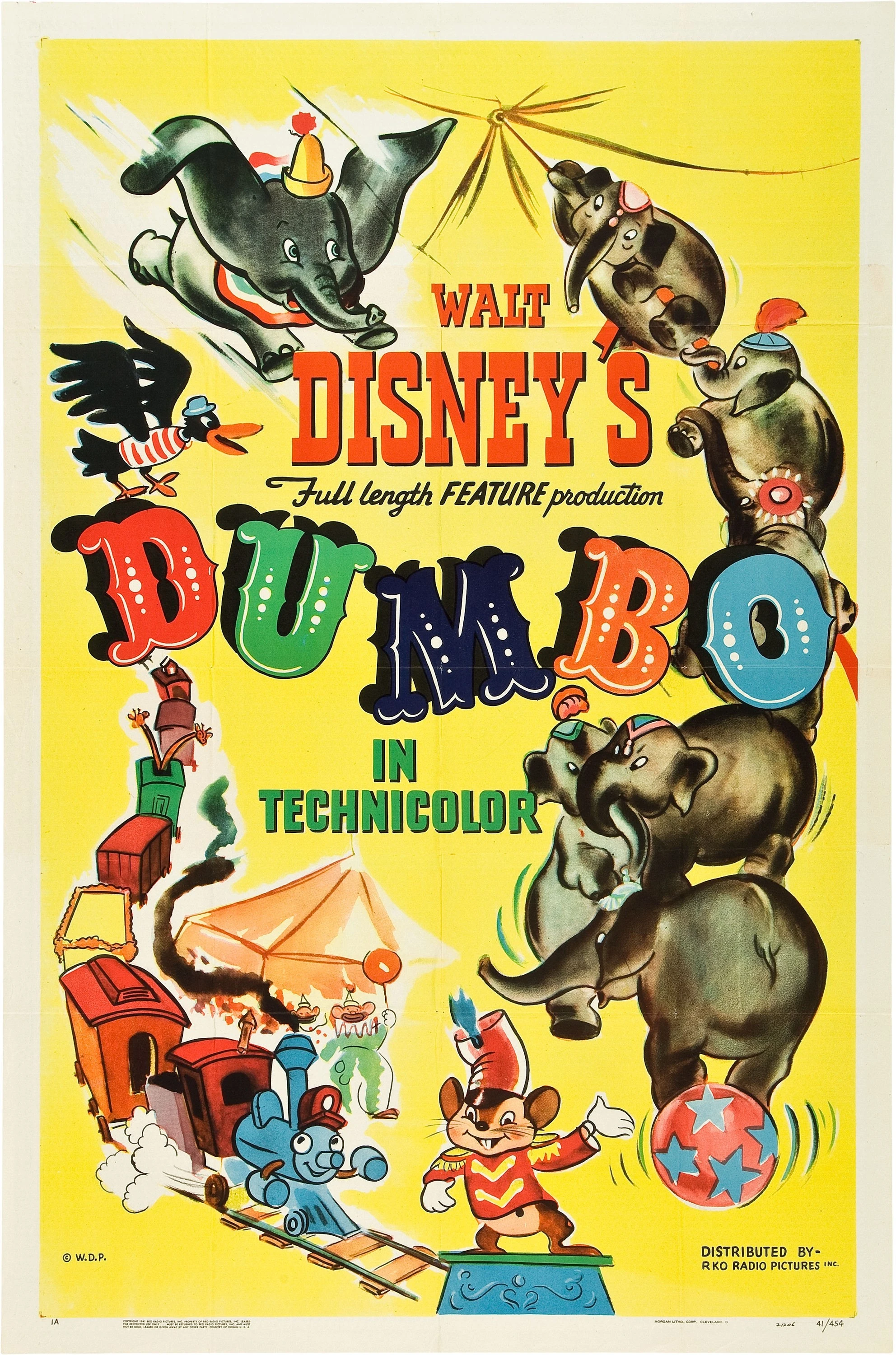

This film allowed artists to experiment with their artwork (Pink Elephants on parade). The movie was a huge hit! TIME magazine even wanted to feature in on the cover of their magazine for December 1941 but Pearl Harbor occurred and the United States entered into World War II.
Bambi (1942)
At this time, Bambi was very far into development so Disney released this film after the War broke out. The story is based on a book and Walt wanted to the film to look like reality and not fantasy. So the animators spent a bunch of time drawing forest animals and even had some brought into the studio so they could practice.

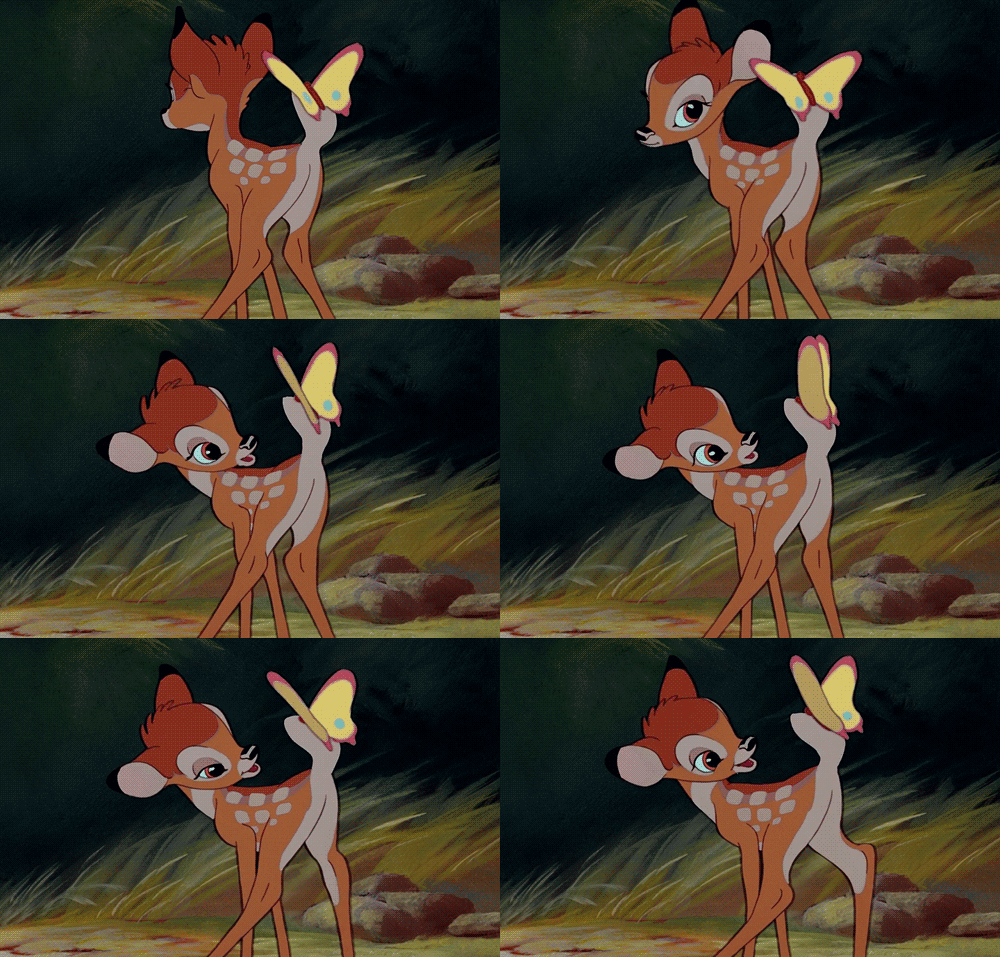
This film also marked the first time that death came to a Disney film. In previous movies, the characters always came back to life but in this one, Bambi’s mother doesn’t return. Walt stuck to his ideals of making the story the most important thing and by making the movie emotional it allowed this to happen. Like Dumbo, it was a huge success and audiences were emotionally connected to the story.

After the release of Bambi, the Golden Age of Animation came to an end with the start of the war. At this time in order to make money, Disney Animation started making training videos for the US Military. Along with these films for World War II, Disney created “Packaging” Film’s which were a bunch of shorts packaged into a long movie. After reigning in the animation field Disney was still looking to the future and when the age of Television came about Walt saw the possibilities that it could create for the company.
 Marketing the Magic
One Comment Add yours